
Oil processing facilities form the foundation of the worldwide energy sector, converting crude petroleum into essential fuels such as petrol, diesel, aviation fuel and various petrochemical products.

United States President Donald Trump has said that India's Reliance Industries will make an investment in a new oil refinery being opened in Texas, thanking the company and 'our partners in India' for the deal.
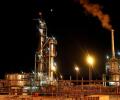
Ukrainian drones attacked the Kirishi oil refinery in Russia's northwest, one of the country's largest, sparking a fire when debris fell from a shot-down drone, Russian officials said on Sunday, France 24 reported.

Falling debris from an intercepted Iranian drone caused a 'limited fire' at Saudi Aramco's Ras Tanura refining facility in Saudi Arabia, Saudi Defence Ministry spokesperson Turki Al-Maliki said, according to Al Arabiya.

A major fire near the main unit of the newly built Rajasthan refinery of HPCL has postponed the inauguration by Prime Minister Narendra Modi. The fire, which broke out near the crude distillation unit, was doused in about two hours with no reported casualties.

An Indian worker from Odisha was killed and two others were injured in a drone attack by Ukraine in the Moscow region. The deceased, A Rameya, was working at an oil refinery. Efforts are underway to repatriate his body.


The US has seized an oil tanker, 'Skywave', linked to Iran in the Indian Ocean, as part of efforts to disrupt Iran's oil shipments and enforce sanctions. The vessel was part of a network transporting sanctioned Iranian crude oil, with the seizure occurring amid heightened tensions between Washington and Tehran.
State-owned Bharat Petroleum Corporation Ltd (BPCL) is willing to dilute a 30-40 per cent stake in its upcoming greenfield refinery in Andhra Pradesh, with Gulf energy major Saudi Aramco and upstream player Oil India Ltd (OIL) likely to join as partners, a senior BPCL executive said.

Indian refiners are recalibrating their crude sourcing strategy due to supply disruptions in West Asia, leading to Venezuela and Brazil emerging as top five suppliers in April, replacing traditional sources like Iraq and the United States.

A US-sanctioned tanker carrying Iranian crude oil has rerouted mid-voyage from its previously indicated destination of India to China, raising questions about payment issues and the future of India's Iranian oil imports.

India's largest private refiner, Reliance Industries Ltd, successfully navigated a volatile energy market in the last quarter of FY26 by diversifying crude sourcing and demonstrating operational agility, particularly in response to geopolitical disruptions and cost fluctuations.

Indian stock market indices Sensex and Nifty experienced a significant drop in early trade, reversing a three-day rally. The decline was triggered by a sharp increase in crude oil prices, weak global market trends, and continuous outflows of foreign funds.

The targeted eastern area is of immense strategic importance, as it is where the "majority of the country's oil resources are located."

After the Israeli attack on Iran's South Pars Gas Field on Wednesday night, in retaliation, Iran struck Qatar's Ras Laffan Industrial City, resulting in extensive damage, as per the country's Ministry of Defence.

State-run Bharat Petroleum Corporation Ltd (BPCL) plans a significant capital expenditure of 25,000 crore for the financial year 2026-27, primarily for ongoing expansion projects. The company also stated that the recent 4-per-litre price hike in petrol and diesel has provided some financial relief amidst volatile crude oil prices and mounting losses.

Indian refiners have access to only limited Iranian volumes compared with Russian oil, and even the barrels on offer come with 'too many hassles'.

Iran will open what is being touted as the Middle East's largest oil refinery, Shazand, in the central Iranian city of Arak in the next few days.

The United States has announced it will not renew sanctions exemptions for the purchase of Russian and Iranian oil, ending a 30-day waiver that allowed some countries, including India, to continue importing Russian oil despite sanctions related to the Ukraine war.

'Neither do the Israelis. The two attacking parties have very little economic interest in Hormuz.'

Reliance Industries Ltd on Thursday said it has halted the use of Russian crude at its export-only refinery in Jamnagar, Gujarat, as the company moves to comply with European Union sanctions. Reliance is India's largest buyer of Russian oil, which it processes and turns into fuel, such as petrol and diesel, at its giant oil refining complex at Jamnagar.
A Monaco-based fuel technology company, FOWE Eco Solutions, claims its patented Cavitech fuel emulsion technology can help industries slash fuel consumption, reduce emissions, and improve equipment performance by using water in fuel.
A Monaco-based fuel technology company, FOWE Eco Solutions, claims its patented Cavitech fuel emulsion technology can help India reduce fuel consumption, emissions, and improve equipment performance by using water in a fuel-oil-water emulsion.

India possesses two months of fuel stockpiles and faces no supply concerns despite global energy disruptions, according to Oil Minister Hardeep Singh Puri. However, state-run fuel retailers are incurring losses of up to Rs 1 lakh crore in a single quarter due to elevated crude prices and unchanged retail fuel prices, raising questions about the sustainability of these losses.
Private-sector oil refiner Reliance Industries Limited (RIL) last week received a general licence from the United States (US) government to buy Venezuelan oil, an industry executive said.

The United States has encouraged India to purchase Russian oil already at sea to mitigate supply shortages and price increases amid the West Asia conflict, according to Energy Secretary Chris Wright. This move is described as a short-term effort to stabilise the market without altering Washington's policy towards Russia.

Of the 1.32 trillion capex target for FY26, State-run oil firms have already spent 1.07 trillion in the first 10 months.
A Monaco-based fuel technology company, FOWE Eco Solutions, claims its patented Cavitech fuel emulsion technology can help industries slash fuel consumption, reduce emissions, and improve equipment performance by using water.
US Energy Secretary Chris Wright said that long-term oil supplies are 'abundant' and there are no worries regarding that, but in the short term, there is a need to get oil on the market.
The cause of the explosion was not known when reports last came in.
"There is an alert to intensify security in and around the Bharat Petroleum Corporation Limited and Hindustan Petroleum Corporation Limited refineries following specific information about a possible terror attack," a police officer involved in the exercise told PTI on condition of anonymity.

A US-sanctioned tanker carrying Iranian crude oil is heading to India, marking the resumption of oil imports from Iran after seven years.

India's eight core infrastructure sectors recorded a two-month high growth of 1.7 per cent in April, primarily boosted by strong performances in steel, cement, and electricity production, according to government data.

The government has introduced a mandatory 25-day gap between LPG cylinder bookings due to supply concerns arising from global disruptions and tensions in the Strait of Hormuz. This measure aims to prevent hoarding and prioritise essential non-domestic sectors, while domestic LPG production is being increased to mitigate shortages.

The Strait of Hormuz crisis is impacting lifestyles worldwide, from reduced gold purchases in India to energy conservation in Europe and Japan, as governments urge citizens to adapt to the global energy shock.

India's procurement of Venezuelan crude oil has picked up momentum since April and the South American nation has already emerged as the third largest oil supplier to the country.

Indian companies, however, are now paying a premium of $6-$7 a barrel for Russian oil, compared with discounts of $8-$10 a barrel before the start of the conflict.

The ministry of petroleum and natural gas on Friday reiterated that India has sufficient stock of crude oil, petrol and diesel, while ensuring an uninterrupted supply of LNG and LPG despite disruptions caused by the ongoing West Asia conflict.

India has refuted claims of payment issues hindering crude oil imports from Iran, clarifying that refiners have the flexibility to source oil from various global suppliers. The Ministry of Petroleum and Natural Gas addressed reports of a tanker rerouting to China, emphasising standard industry practices and secured oil requirements.

The Indian government has directed oil refineries to increase LPG production to ensure a stable supply of domestic cooking gas, amidst concerns over potential disruptions from the escalating Middle East conflict and its impact on imports.
 © 2026 Rediff.com - Advertise with us - Disclaimer - Privacy Policy - Sitemap - Feedback - About us - Terms of use - Grievances